
E-Rickshaw Subsidy 2026 — PM E-DRIVE Till March 2028
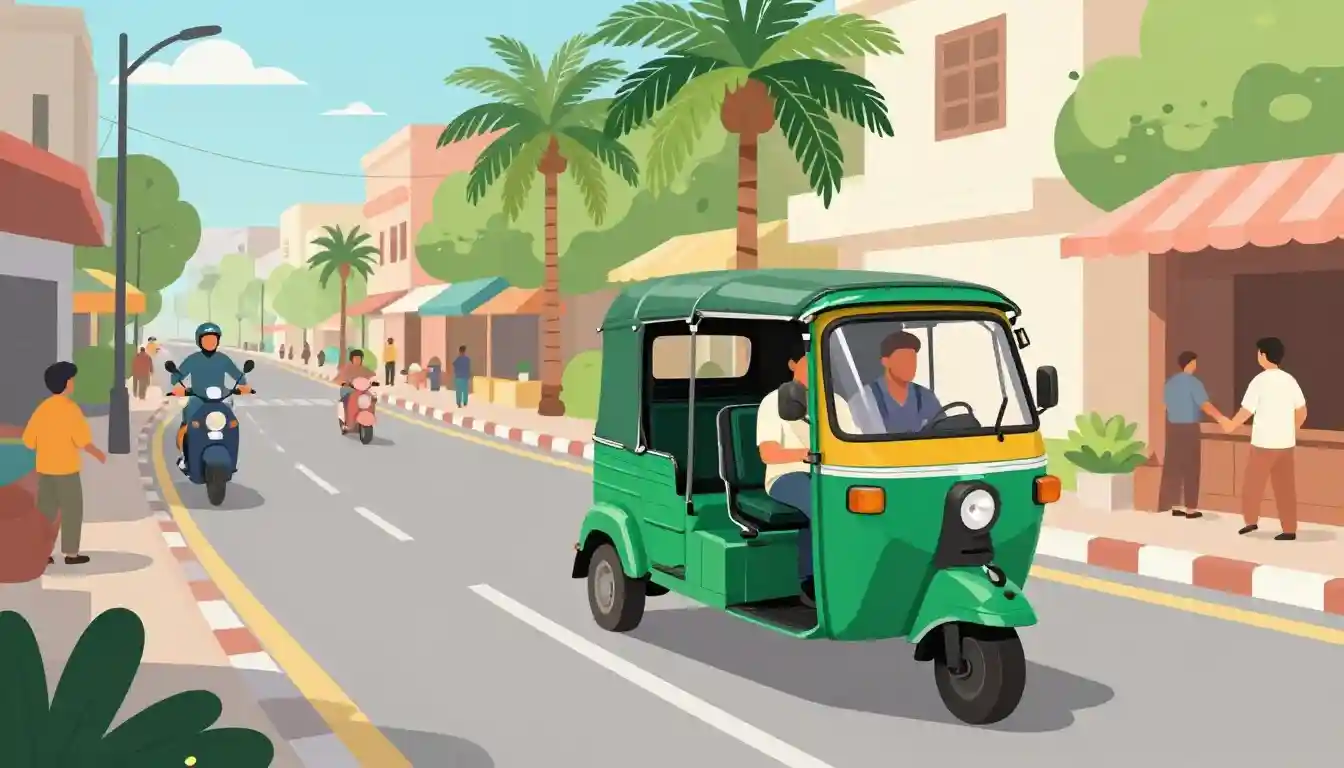
While the electric scooter subsidy under PM E-DRIVE ended on 31 July 2026, one central subsidy is still alive and running: registered e-rickshaws and e-carts receive ₹2,500 per kWh, up to ₹12,500 per vehicle, until 31 March 2028. For anyone buying an e-rickshaw, whether you drive it yourself, rent it out, or run a small delivery fleet, this is the most direct government support still available in the electric vehicle market. On top of the central payment, several states add their own incentives: Delhi alone can add up to ₹50,000 for electric three-wheelers. This post covers the exact rates, the real maths on typical e-rickshaw batteries, what states add, how the money reaches you, and whether buying now or waiting is the better move.
The One Central Subsidy That Survived
The PM E-DRIVE scheme covered several segments with different timelines. The electric two-wheeler portion exhausted its budget and closed on 31 July 2026. The registered L5 segment, larger, faster electric autos, closed even earlier, on 26 December 2025, after reaching its target. That leaves registered e-rickshaws and e-carts (the low-speed three-wheeler category) as the only segment still collecting central money. The rates were set at the scheme's launch and have not changed, which is rare for government incentives and worth locking in before funds run out.
| Detail | Value |
|---|---|
| Rate | ₹2,500 per kWh of battery |
| Maximum per vehicle | ₹12,500 |
| Valid until | 31 March 2028 |
| Scheme outlay | ₹10,900 crore (fund-limited across all segments) |
| Status | Active for e-rickshaws & e-carts; L5 segment closed 26 Dec 2025 |
The fund-limited tag deserves emphasis. The same scheme's two-wheeler arm closed early once its allocation was consumed. The three-wheeler arm could follow the same path if demand surges, so the practical planning assumption should be that this subsidy may not survive the full 31 March 2028 runway.
The Real Maths: How Much You Get on a Typical Battery
E-rickshaw batteries range from about 3 kWh on small city models to 8 kWh or more on load carriers and carts. The subsidy scales with capacity until it hits the ₹12,500 ceiling. Here is the exact calculation for common battery sizes.
| Battery size | Subsidy (₹2,500/kWh) | Capped amount | Typical vehicle |
|---|---|---|---|
| 3 kWh | ₹7,500 | ₹7,500 | Small commuter e-rickshaw |
| 4 kWh | ₹10,000 | ₹10,000 | Standard passenger e-rickshaw |
| 5 kWh | ₹12,500 | ₹12,500 | Standard passenger / cargo e-rickshaw |
| 6–8 kWh | ₹15,000–20,000 | ₹12,500 (capped) | Heavy load carts and larger variants |
Two practical lessons. First, a 5 kWh battery is the sweet spot, since it reaches the full ₹12,500 without paying for capacity you may not need. Second, the subsidy is a flat deduction from the invoice, so compare it against the battery's actual cost: many fleet buyers find the maths works best with two 5 kWh models rather than one oversized vehicle.
What States Add: The Delhi Example
State incentives stack on top of the central payment. Delhi's EV Policy 2026 includes three-wheelers in its benefit structure, making it the strongest market for e-rickshaw buyers in the country:
- Purchase incentive: up to ₹50,000 for electric three-wheelers under the Delhi scheme
- Scrapping bonus: ₹25,000 for surrendering an old three-wheeler at an approved facility
- Road tax and registration: free
Combine these with the central ₹12,500 and a Delhi buyer with an old three-wheeler to scrap stands at over ₹87,500 in total support before the vehicle's own economics start. Even without the scrap bonus, the stack is ₹62,500, a meaningful slice of a typical e-rickshaw's ₹1.5–2.2 lakh price. Other states with active EV policies, including Maharashtra, also extend benefits to three-wheelers, though the amounts and quotas vary, so always check your state's current notification before ordering.
E-Rickshaw vs Petrol Auto: Daily Running Economics
Subsidies reduce the purchase price, but the real case for an e-rickshaw is the running cost. A typical e-rickshaw covers 70–90 km a day on roughly 4–5 kWh of electricity; at ₹8 per kWh, that is ₹32–40 a day. A petrol three-wheeler doing the same distance at 38 kmpl and ₹104 per litre spends about ₹190–245. The table below shows the daily and monthly picture.
| Cost item | E-rickshaw | Petrol auto (38 kmpl) |
|---|---|---|
| Cost per km | ~₹0.45 | ~₹2.74 |
| Daily energy (80 km) | ~₹36 | ~₹219 |
| Monthly energy (26 days) | ~₹940 | ~₹5,700 |
| Annual energy | ~₹11,300 | ~₹68,400 |
That is an annual saving of roughly ₹57,000 in energy alone for a full-time operator, before counting lower maintenance (no engine oil, no clutch, fewer moving parts) and free road tax. Over a five-year ownership period the energy savings comfortably exceed the vehicle's purchase price, which is why e-rickshaw fleets have become the fastest-growing segment of commercial EVs in India.
How the Money Actually Reaches You
Unlike the Delhi scooter subsidy, which is claimed online after purchase, the central e-rickshaw subsidy is deducted at the dealership at the time of purchase. You share your Aadhaar, the dealer completes e-KYC with face authentication, and the subsidy amount is reduced directly from your invoice. There is no separate application form, no waiting for a bank transfer, and no 30-day deadline to track. The same pattern applies to state purchase incentives in most states; Delhi's three-wheeler incentive also flows through the dealership deduction route, with the scrapping bonus handled separately via the portal.
Because the deduction happens at invoice level, two documents deserve scrutiny: the invoice must show the subsidy line clearly, and the battery capacity must match the kWh figure used for the calculation. If a dealer offers a "discount" without a subsidy line on the invoice, ask whether they are absorbing the subsidy themselves, because that is a different (and weaker) deal for you.
Who Benefits Most From This Subsidy
- Self-employed drivers: an owner-operator doing 80 km daily recovers the ₹12,500 subsidy in under three months of energy savings.
- Small fleet owners: 5–20 vehicles multiplies the incentive and the running-cost advantage into a serious margin.
- Delivery and logistics businesses: e-carts with 6+ kWh batteries still get the capped ₹12,500, and their per-km cost stays below ₹0.60.
- First-time commercial buyers: the dealer-side deduction removes paperwork risk, the main failure point of most subsidy claims.
The common thread: the subsidy is most valuable to people who run the vehicle daily. A part-time owner who rides 20 km a day still benefits, but the incentive becomes a smaller share of their cost picture.
Should You Buy Now or Wait?
The honest answer is: buy now if you have a use for the vehicle today. Three reasons. First, the scheme is fund-limited and its two-wheeler arm already closed early, so there is no guarantee the three-wheeler arm survives until March 2028. Second, subsidy rates in India have trended downward in every successive scheme; the ₹2,500/kWh rate for e-3Ws is already lower than historical highs, and a successor scheme would likely continue that direction. Third, the ₹12,500 is a fixed amount, so the same money buys less battery as prices adjust, but the subsidy itself does not grow. The only scenario for waiting is if you expect a specific new model with a significantly larger battery within months, and even then, running-cost savings during the wait usually outweigh the difference.
Buying Checklist for E-Rickshaw Buyers
Before you pay the booking amount, run through this short list. The e-rickshaw market is more fragmented than the scooter market, and a few minutes of verification at the dealer can save you from losing the subsidy or buying an unregistered vehicle that qualifies for nothing.
- Confirm the vehicle is a registered e-rickshaw, not an L5 auto: the vehicle class on the invoice decides whether the central subsidy applies. Only registered low-speed e-rickshaws and e-carts are eligible.
- Check the battery capacity written on the invoice: the dealer calculates the subsidy from this number. A mismatch between the brochure and the invoice is the most common error in this segment.
- Verify the dealer is on the OEM's official list: subsidy claims flow through the manufacturer's system; a non-empanelled dealer cannot complete the e-KYC deduction correctly.
- Insist on a written subsidy line: the invoice must show the ₹2,500 per kWh deduction separately, so you can see exactly what you received.
- If buying in Delhi, note the state claim separately: the central money is deducted at the dealership, but the Delhi three-wheeler incentive and scrapping bonus follow the state portal process, so keep copies of everything.
Most subsidy failures in this segment are paperwork failures, not scheme failures. A dealer who hesitates to put the subsidy in writing is a signal to take your business elsewhere.
FAQs
Is the e-rickshaw subsidy still available in 2026?
Yes. Registered e-rickshaws and e-carts get ₹2,500 per kWh, capped at ₹12,500 per vehicle, under PM E-DRIVE until 31 March 2028, subject to fund availability.
What is the difference between an e-rickshaw and an L5 e-3W?
Registered low-speed e-rickshaws and e-carts still receive the subsidy. The L5 segment (larger, faster electric autos) closed on 26 December 2025 after its target was met.
How do I claim the e-rickshaw subsidy?
No separate form. The dealer deducts it from your invoice using Aadhaar e-KYC with face authentication at the time of purchase. Verify the subsidy line on the invoice.
How much state money can I stack in Delhi?
Delhi adds up to ₹50,000 for electric three-wheelers plus a ₹25,000 scrapping bonus and free road tax and registration, over ₹87,500 combined with the central ₹12,500.
Is an e-rickshaw cheaper to run than a petrol auto?
Yes, about ₹0.45 per km against ₹2.74 per km, saving roughly ₹57,000 a year in energy for a full-time operator covering 80 km daily.