Best EV Scooter for College Students in India 2026: Budget Picks Under ₹1 Lakh
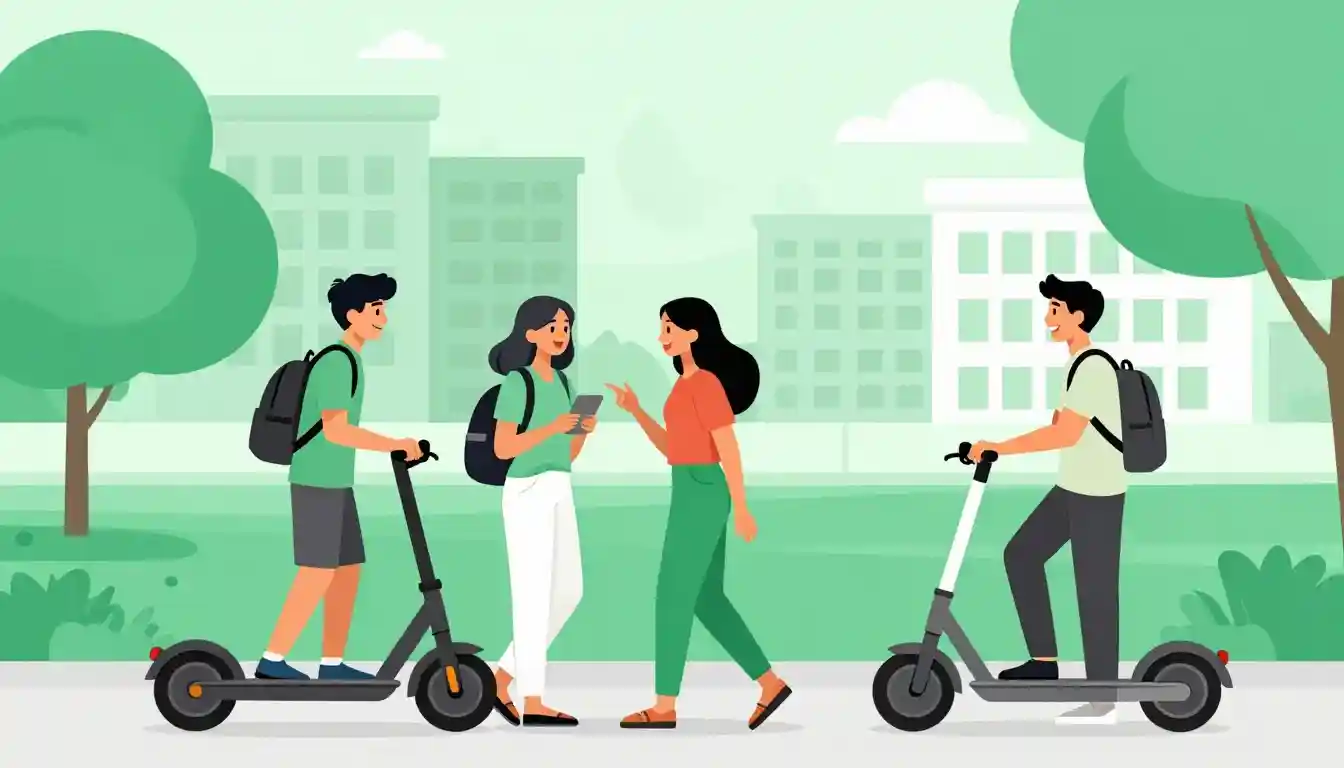
A student scooter has one job: get you to college and back, every day, without emptying your parents' wallet. An electric scooter does that better than anything else in 2026, because a 20 km daily commute costs about ₹160 a month on electricity against ₹1,380 on petrol. So we sat down and shortlisted the three best EV scooters for college students, worked out the real prices after subsidy, figured out EMI plans that fit a student budget, and added up what a 4-year college life will actually cost.
Why an EV Scooter Makes Sense for Students in 2026
The central PM E-DRIVE subsidy ended on 31 July 2026, but student economics did not change. College rides are short, daily and predictable, which is exactly the profile a small-battery EV loves. A 2-2.5 kWh scooter charges overnight for ₹16-20 and covers 25-40 km of real riding. Insurance is cheaper than a petrol scooter, servicing is minimal (no oil, filters or clutch), and most states still waive road tax and registration for EVs. Throw in the zero-emission point and an EV is the cheapest, cleanest and easiest way for a student to be mobile, as long as you pick a model that fits the budget honestly.
Cheapest EV Scooters in India (2026): The Real List
| Scooter | Ex-showroom price | Battery | Claimed range | Real range | Boot space |
|---|---|---|---|---|---|
| Bounce Infinity E1 | ₹89,999 | 2 kWh | 85 km | 55-65 km | Good (~24 L) |
| Pure EV EPluto 7G | ₹92,999 | 2.5 kWh | 90 km | 60-70 km | Small |
| Hero Vida VX2 Go | ₹99,490 | 2.2 kWh | 95 km | 60-75 km | Modest |
| Ola S1 X (2 kWh) | ₹84,999 | 2 kWh | 85 km | 60-70 km | Modest |
One honest catch before you get excited: these are ex-showroom prices. On-road, most states add registration and insurance, which pushes the real price up ₹3,000-8,000. The Ola S1 X is the cheapest on paper, but the Bounce E1 and Pure EV ePluto 7G give you more practical features per rupee in this class, and the Vida VX2 Go is the lightest and easiest to handle of the group.
Prices After Subsidy in Delhi and Other Student States
Subsidies are the difference between "affordable" and "truly cheap". In Delhi, the Year 1 purchase subsidy gives ₹10,000 per kWh (cap ₹30,000), the scrap bonus adds ₹10,000, and road tax and registration are free:
| Scooter | Ex-showroom | Delhi subsidy + scrap | Delhi price | EMI (24 months, 8.5%) | EMI (36 months, 8.5%) |
|---|---|---|---|---|---|
| Pure EV EPluto 7G | ₹92,999 | ₹35,000 | ₹57,999 | ₹2,636 | ₹1,830 |
| Bounce Infinity E1 | ₹89,999 | ₹30,000 | ₹59,999 | ₹2,727 | ₹1,893 |
| Hero Vida VX2 Go | ₹99,490 | ₹32,000 | ₹67,490 | ₹3,068 | ₹2,130 |
Outside Delhi, the numbers still work. In Maharashtra, the 10-15% capital subsidy cuts ₹9,000-15,000 off these scooters. UP, MP, Bihar, Punjab and Odisha all have purchase support schemes (₹5,000-10,000 depending on state), so check the state subsidy pages for current rates, because quotas and amounts change. The principle is the same everywhere: apply early in the scheme year, because state EV budgets are first-come, first-served.
EMI Plans That Fit a Student Budget
Most students cannot pay ₹1 lakh upfront, and that is fine. After subsidy, the financing need is small. Take the Bounce E1 at ₹59,999 in Delhi: with a ₹10,000 down payment from parents, you finance ₹50,000. At 8.5% interest that is ₹2,272 a month for 24 months, less than a mid-range smartphone EMI. Stretch to 36 months and it drops to ₹1,578 a month. The down payment makes a bigger difference than students expect:
| Down payment | Amount financed | EMI (24 months, 8.5%) | EMI (36 months, 8.5%) |
|---|---|---|---|
| ₹0 | ₹60,000 | ₹2,727 | ₹1,893 |
| ₹10,000 | ₹50,000 | ₹2,272 | ₹1,578 |
| ₹20,000 | ₹40,000 | ₹1,818 | ₹1,262 |
Every ₹10,000 of down payment cuts the 24-month EMI by about ₹455 a month, which works out to nearly ₹11,000 less paid over the full loan term. Banks will usually need a parent as co-applicant for students without income proof; alternatively, NBFCs like Bajaj Finserv approve quicker. One rule: the EMI should be comfortably below one-third of your part-time earnings or allowance, because the scooter should make you a money-saver, not money-broke. And one practical trick: in states like Delhi where road tax and registration are free for EVs, there is no extra on-road charge sneaking into the loan, so the amount you finance is exactly the subsidised price plus insurance. Ask the showroom for that breakup in writing.
Which Student EV Scooter Should You Pick?
Here is the short verdict. Choose the Bounce Infinity E1 if you live in a hostel or apartment without a charging socket, because its swap network is your lifeline and its boot is the roomiest of the three. Choose the Pure EV EPluto 7G if you want the biggest battery for the least money and have a dealer nearby for service; at ₹57,999 in Delhi it is the cheapest per km of range in this class. Choose the Hero Vida VX2 Go if you are a shorter or first-time rider, since 72.5 kg with a low seat height beats every spec sheet in everyday comfort. And choose the Ola S1 X (2 kWh) if brand service and a screen matter more than weight. Any of the four works for a 20 km daily commute; the difference is service distance, boot size and your charging setup. Decide on those three, not on horsepower.
Running Cost: 20 km a Day Is Almost Free
Here is the number that makes students smile. A 20 km daily round trip, 26 days a month, is 520-600 km. On a home-charged EV at ₹0.27 per km, that is ₹140-162 a month, less than a movie ticket. The same distance on a 45 kmpl petrol scooter at ₹104 per litre costs ₹1,200-1,386. Over a 10-month academic year, the EV saves ₹10,600-12,200. Add the difference in servicing (₹1,500 a year for EV against ₹3,500 for petrol) and insurance, and a student EV owner saves roughly ₹12,000-14,000 per academic year. For hostel students without home charging, the Bounce E1's swap network is the fallback: pricier per km, but still cheaper than petrol.
Helmet, Storage and the Practical Stuff
A good ISI-marked helmet costs ₹1,000-2,500 and is non-negotiable. In most cities traffic police fine riders without one, and college roads are chaotic. Pick a model with a decent under-seat boot (the Bounce E1 is the roomiest of the budget group) so a helmet and a raincoat fit inside; you do not want to carry them to class. Also budget ₹500-1,500 for accessories: a sturdy phone holder, a rain cover, and maybe a small top-box. Parking: hostel and college campuses often have charging sockets near staff parking, so ask early and you may get a free top-up routine. Finally, never buy a "deal" scooter without checking that the battery warranty transfers to you and covers the full period you will own it.
EV vs Petrol: 4-Year Ownership Cost for a Student
| Cost (4 years) | EV (Bounce E1, Delhi) | Petrol scooter (₹90,000) |
|---|---|---|
| Purchase price | ₹59,999 | ₹95,000 (on-road) |
| Insurance (4 yrs) | ₹16,000 | ₹19,000 |
| Servicing (4 yrs) | ₹6,000 | ₹14,000 |
| Fuel/charging (6,000 km/yr) | ₹6,480 | ₹55,440 |
| 4-year total | ₹88,479 | ₹1,83,440 |
Charging is computed at 6,000 km a year at ₹0.27/km (6,000 × 4 × 0.27 = ₹6,480); petrol at ₹2.31/km (6,000 × 4 × 2.31 = ₹55,440). Over four college years the EV scooter costs about ₹95,000 less than the petrol equivalent. That is a full year of hostel fees, or a big head start on your first savings account. The EV's resale value is lower, but the gap is small compared with the running-cost savings.
FAQs
Which is the cheapest EV scooter for a student in India?
The Ola S1 X (2 kWh) at ₹84,999 is the cheapest on paper, but after subsidy the Bounce Infinity E1 (₹59,999 in Delhi) and Pure EV EPluto 7G (₹57,999) are the best value-for-money student picks.
Can a student get a loan for an EV scooter?
Yes, with a parent as co-applicant at a bank, or through NBFCs. After Delhi subsidy, financing ₹50,000-60,000 costs ₹2,272-2,727 a month over 24 months.
How much does it cost to run an EV scooter for college?
About ₹140-162 a month for a 20 km daily commute with home charging. The same ride costs ₹1,200-1,386 a month on petrol.
Do students get extra EV subsidy?
No special student quota exists, but most state subsidies (Delhi, Maharashtra, UP, MP, Bihar, Odisha) apply to anyone buying an EV scooter, and several are first-come, first-served, so apply early.
Is a 2 kWh battery enough for a student?
Yes. A 2 kWh scooter gives 55-70 real km, more than double a typical college round trip. Charge overnight and the range is never a worry.